
South Wales & Bristol specialists
Victorian floor cleaning and restoration
Careful cleaning, coating removal, repairs and sealing for original Victorian and Edwardian tiled floors. We uncover their colour and pattern while respecting the age and character of the tiles.
- Over 15 years’ experience
- Original period floors
- Domestic & commercial
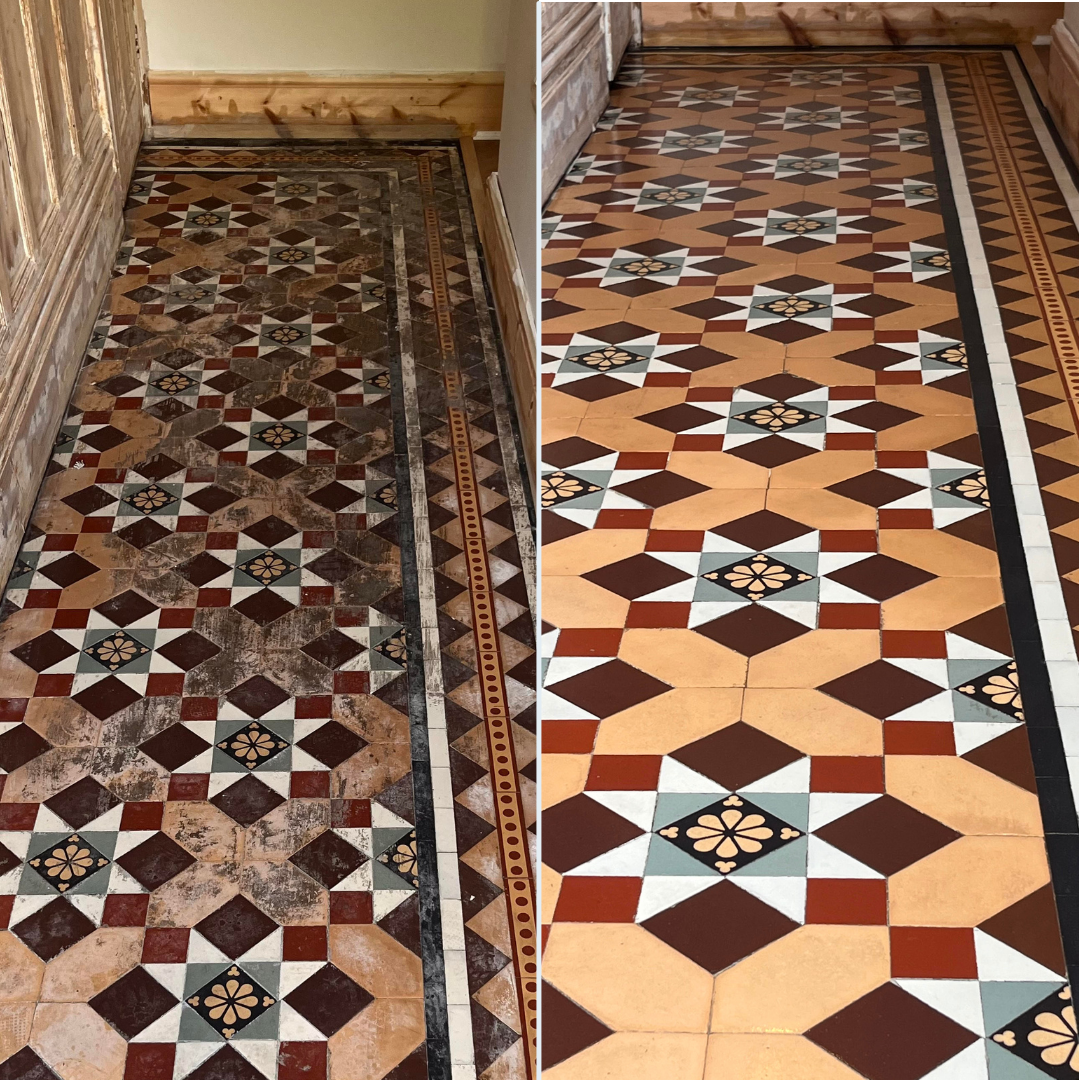
Restore rather than replace
The character is still there—it just needs uncovering
Original geometric and encaustic tiles were made to last. However, decades of ingrained soil, old wax, paint, adhesive, unsuitable coatings and building work can hide the pattern and leave the floor looking beyond recovery.
Our approach begins with an assessment of the tiles, joints, previous treatments and any missing or damaged areas. We then recommend a restoration plan suited to the floor rather than applying a one-size-fits-all treatment.
- Deep cleaning of tiles and grout lines
- Removal of old sealants, wax and residues
- Careful repairs where suitable
- Professional sealing for easier maintenance
- Finish selected for the floor’s age and condition
Common period-floor problems
What can be improved?
Even heavily marked floors can often be transformed once the correct products, machinery and repair methods are used.
Ingrained dirt
Soil settles into textured tile faces and joints, dulling colours and making patterns appear flat.
Paint and adhesive
Remnants from carpets, underlay and decorating can conceal original tiles and require controlled removal.
Old coatings
Waxes and unsuitable sealers may yellow, peel or trap dirt, creating a patchy and uneven appearance.
Loose or missing tiles
Suitable damaged sections may be stabilised or repaired using carefully selected replacement materials.
Weak joints
Age and movement can leave open or crumbling joints that need attention before the floor is protected.
Uneven colour
Old treatments and wear can make sections look mismatched until the surface is thoroughly restored.
Genuine Floor Rescue projects
Period-floor transformations
Each photograph shows a different original Victorian or Edwardian tiled floor from our work.
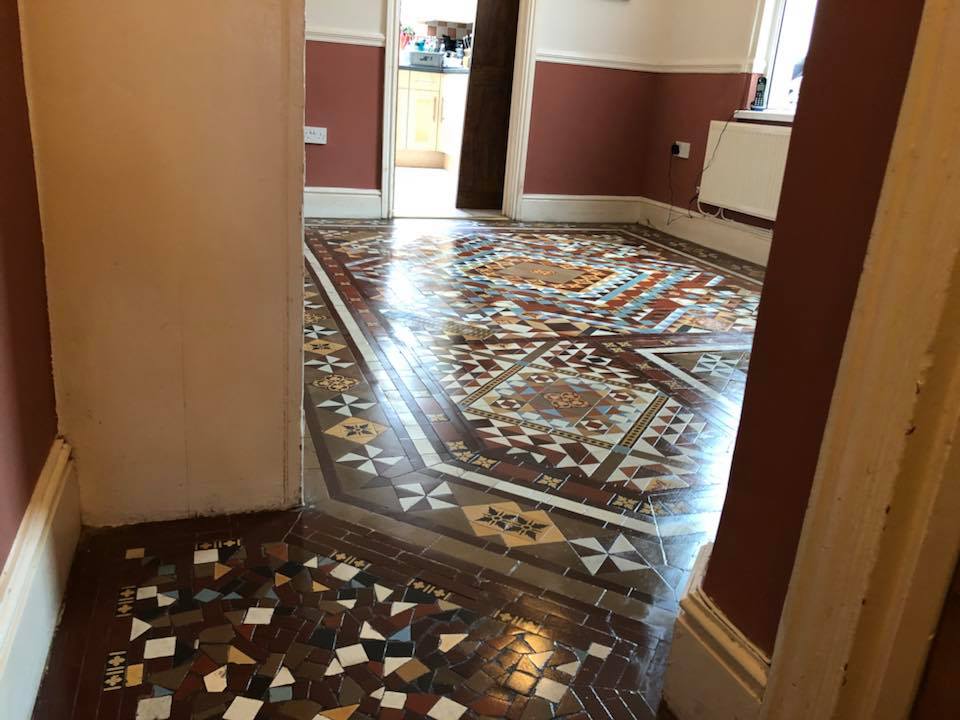 Deep clean & seal
Pattern revealed
Embedded soil and residue were removed so the geometric design could take centre stage again.
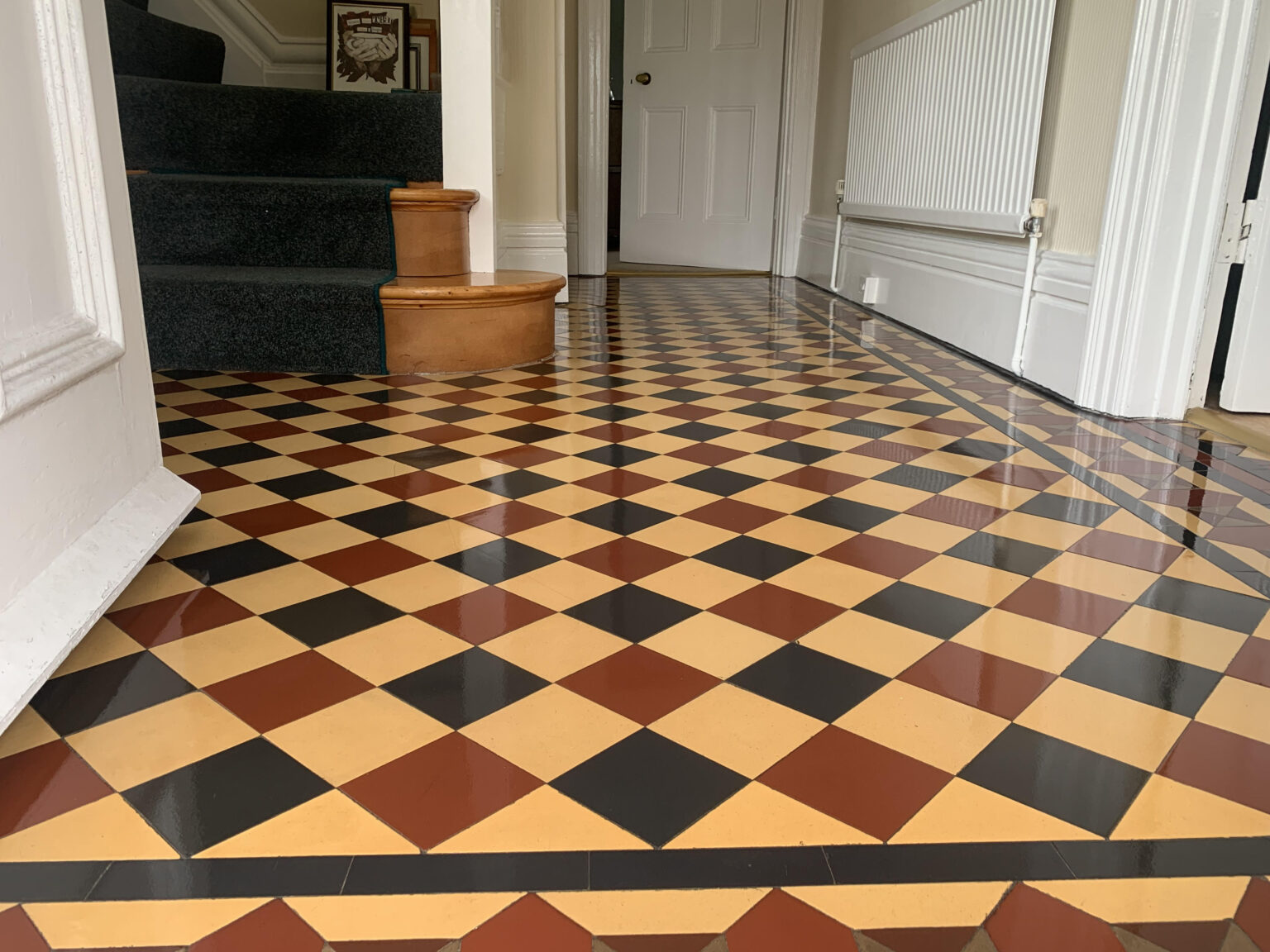 Restore & protect
Original colour returned
Specialist cleaning revived the individual tile colours before the surface was professionally protected.
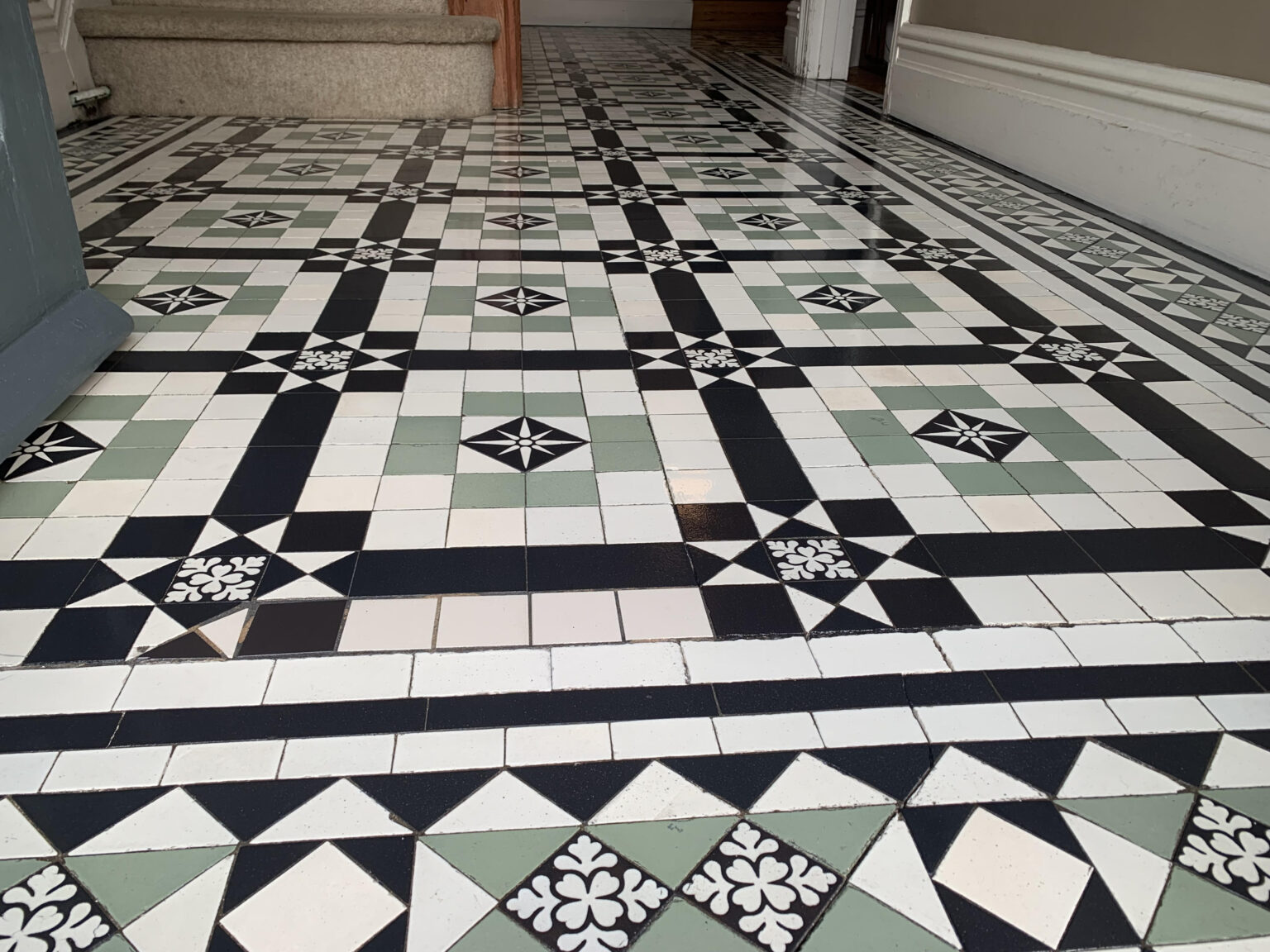 Clean, repair & seal
Character preserved
The floor’s aged character was retained while years of surface contamination were carefully removed.
A floor-specific approach
Our Victorian tile restoration process
The exact stages vary because every period floor has a different history, condition and previous treatment.
Assess
We inspect the tiles, joints, coatings, damage and moisture considerations.
Test
A suitable cleaning or stripping method is chosen after testing the surface.
Clean
Soiling and appropriate residues are loosened and extracted using specialist equipment.
Repair
Agreed joint, crack or tile repairs are completed where practical and suitable.
Protect
Once sufficiently dry, the floor receives a compatible professional sealer.
Honest recommendations
Restoration planned around your floor
Some owners want a subtle, natural appearance; others prefer richer colour and more sheen. The correct option depends on the tile, condition, room, moisture movement and ongoing maintenance.
Before we begin
What we assess
- Whether tiles are original, later replacements or a mixture
- Paint, adhesive, wax and previous sealant residues
- Loose, cracked, hollow or missing tiles
- Condition of joints and perimeter edges
- Signs of moisture movement through the floor
- The finish and maintenance level you prefer
Local period-floor specialists
Serving South Wales and Bristol
We restore Victorian and Edwardian tiled floors in homes and commercial properties throughout the region.
Customer feedback
Restore with confidence
See feedback from customers who chose Floor Rescue to revive and protect their hard floors.
“The results were fantastic and the floor looks better than we could have imagined.”— Floor Rescue customer
Frequently asked questions
Victorian floor restoration FAQs
Can very dirty Victorian tiles be restored?
Often, yes. Heavy soiling, wax and residues can hide far more of the pattern than expected. We assess and test the floor before recommending what can realistically be achieved.
Can you remove carpet adhesive or paint?
Many residues can be reduced or removed, although results depend on the product, how long it has been present and whether it has penetrated or damaged the tiles.
Can missing or broken tiles be repaired?
Suitable localised repairs may be possible. We assess the availability of compatible tiles, the substrate and the extent of damage before advising.
Will the floor be shiny?
Not necessarily. We discuss natural and enhanced appearances and recommend a compatible finish based on the tiles, moisture conditions and your preferences.
How should I maintain the floor afterwards?
We provide aftercare advice. Typically, gentle routine cleaning with a suitable neutral product helps protect the sealer and avoids leaving residue.
Can you quote from photographs?
Photographs, postcode and approximate dimensions are useful for an initial assessment. Some floors may need an on-site inspection or test before a final quotation.
Free period-floor assessment
Show us what is beneath the dirt
Send clear photographs of the whole floor and close-ups of damaged or coated areas, along with your postcode and approximate measurements.
Request your free quotation
Complete the form and we’ll respond as soon as possible.