
South Wales & Bristol specialists
Travertine floor cleaning and restoration
Professional deep cleaning, hole filling, polishing and sealing for tired or damaged travertine floors. We restore the natural colour and finish while helping protect this porous stone from future wear.
- Over 15 years’ experience
- Honed & tumbled travertine
- Domestic & commercial
Specialist natural-stone care
Restore the beauty already present in your travertine
Travertine is full of natural character, but its porous structure means dirt, residues and spills can gradually penetrate the surface. Grout darkens, the finish becomes uneven and small holes may appear as weaker pockets in the stone open over time.
General-purpose cleaners cannot correct these underlying problems and may leave further residue. Our restoration process is selected according to whether the floor is honed or tumbled, its existing coating, the level of wear and the finish you want.
- Remove ingrained soil from stone and grout
- Strip unsuitable sealers and product build-up
- Fill suitable holes and small damaged areas
- Hone or polish the surface where appropriate
- Apply a professional protective sealer
Common travertine problems
When ordinary cleaning is no longer enough
Travertine often deteriorates gradually. Specialist restoration addresses the cause of the tired appearance rather than simply cleaning over it.
Dark tiles and grout
Porous stone and grout trap soil that routine mopping can no longer lift effectively.
Dull or uneven finish
Wear, residues and unsuitable products can flatten the appearance and create patchy reflectivity.
Holes and pits
Natural voids within travertine can open through wear, leaving small cavities that collect dirt.
Old or failing sealer
Degraded coatings may become patchy, discoloured or difficult to maintain and can require stripping.
Scratches and etching
Wear or acidic spills may alter the surface and require honing or polishing rather than cleaning alone.
Difficult maintenance
A professionally restored and correctly sealed surface is usually simpler to care for day to day.
Genuine Floor Rescue projects
Travertine transformations
The correct result depends on the starting condition and desired finish, so each project receives its own restoration plan.
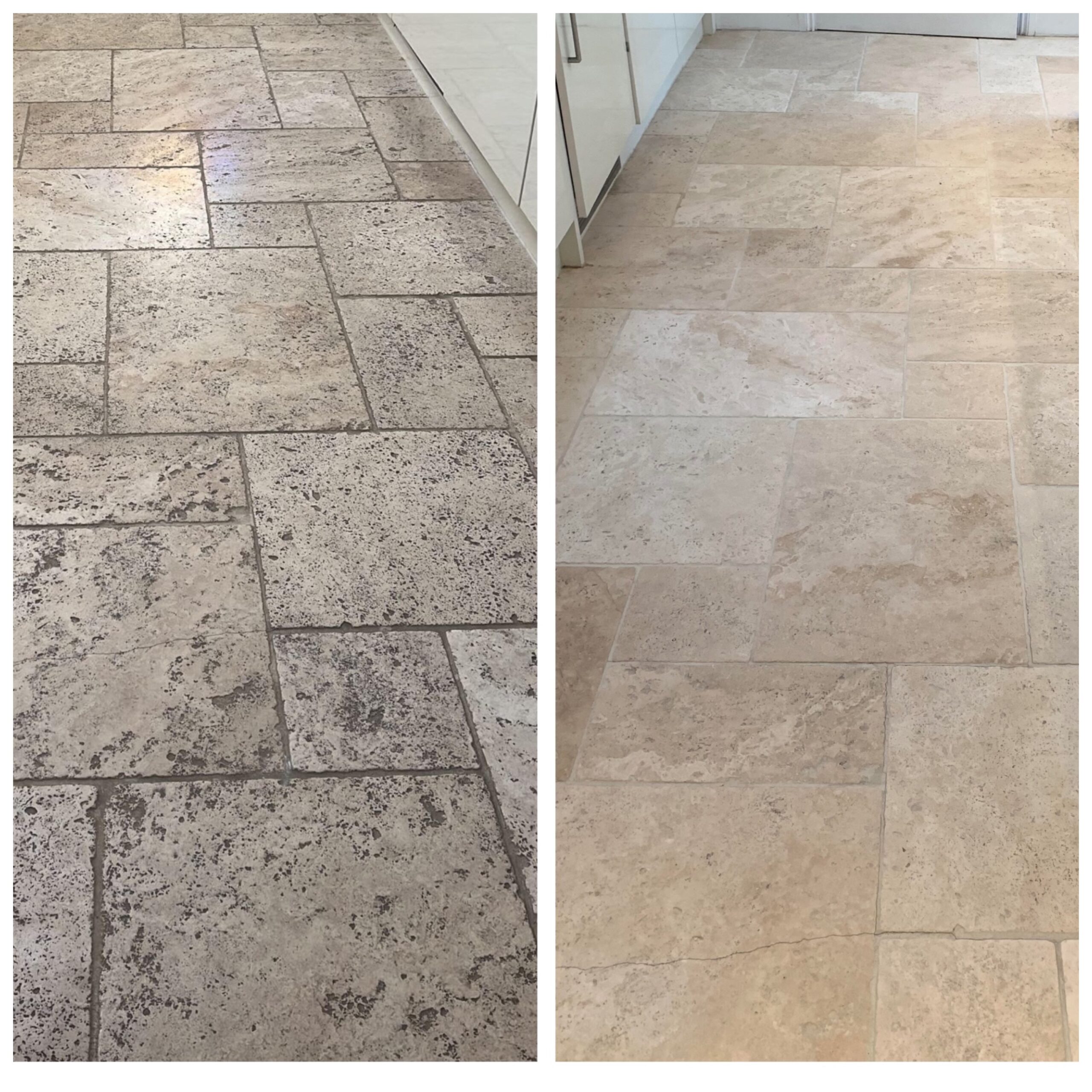
 Clean, polish & seal
Colour and clarity restored
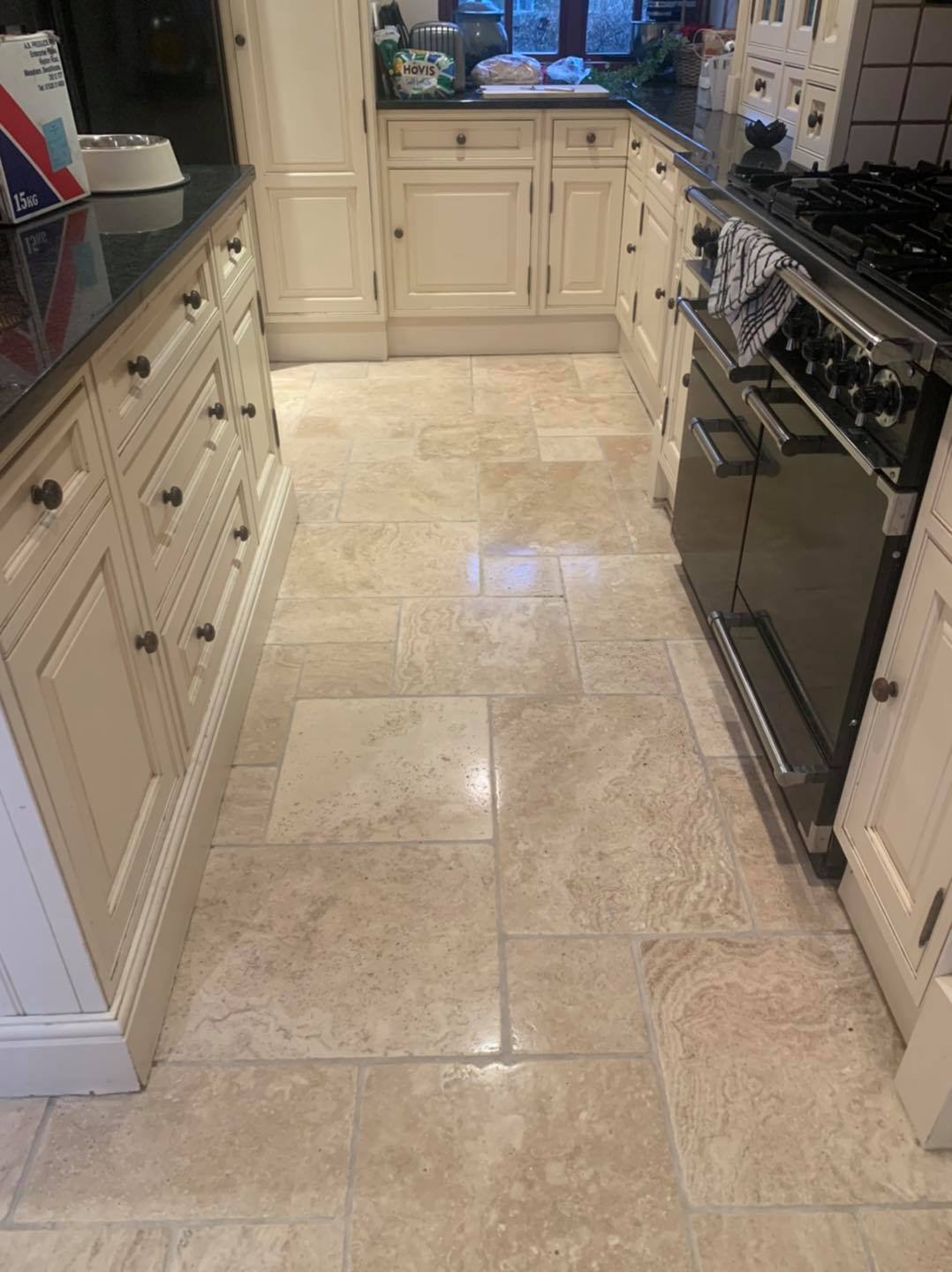
Years of soil were removed before the floor was polished to a light shine and professionally sealed.
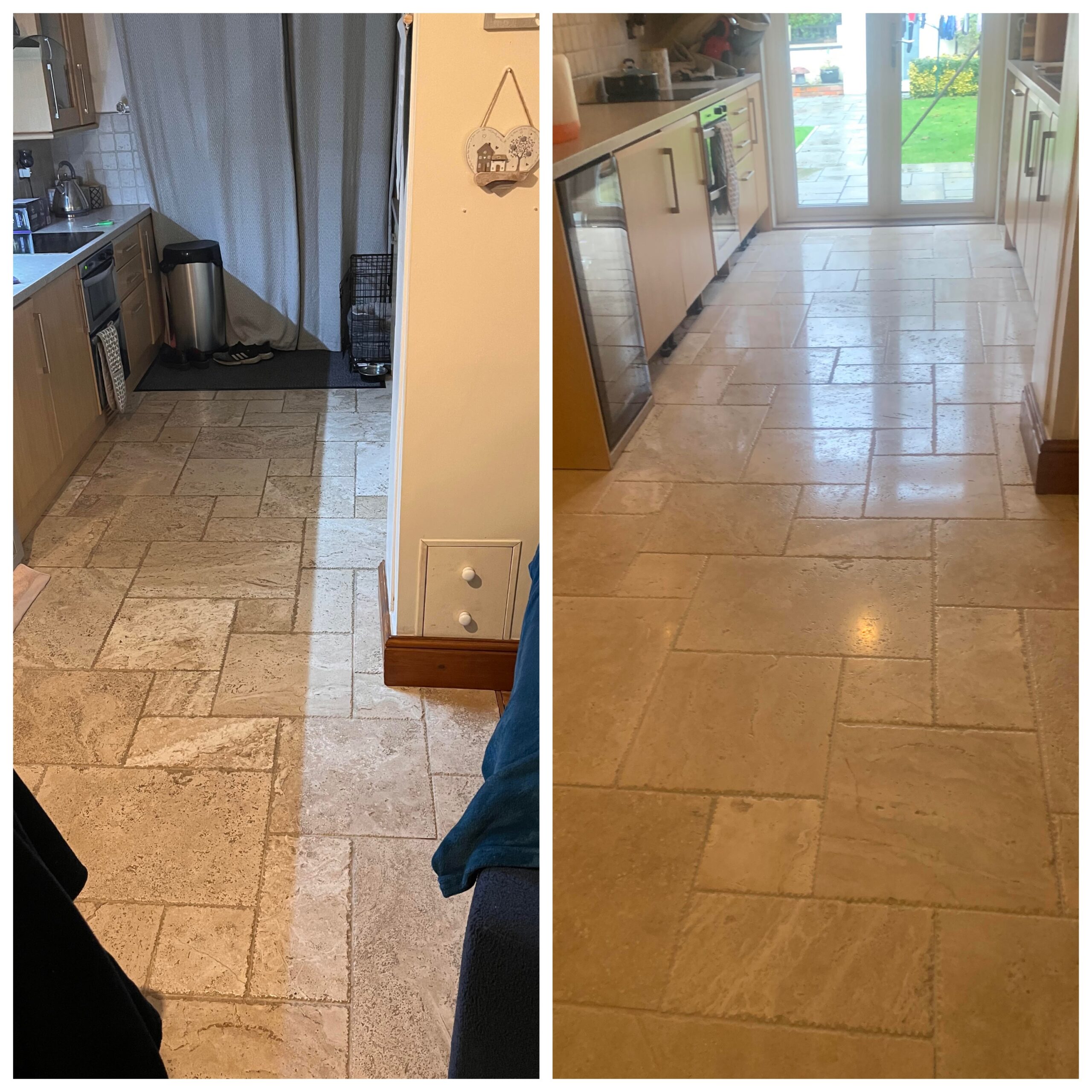
 Clean, fill, polish & seal
Holes filled and blended
Suitable damaged areas were filled after cleaning, then the stone was polished and protected.
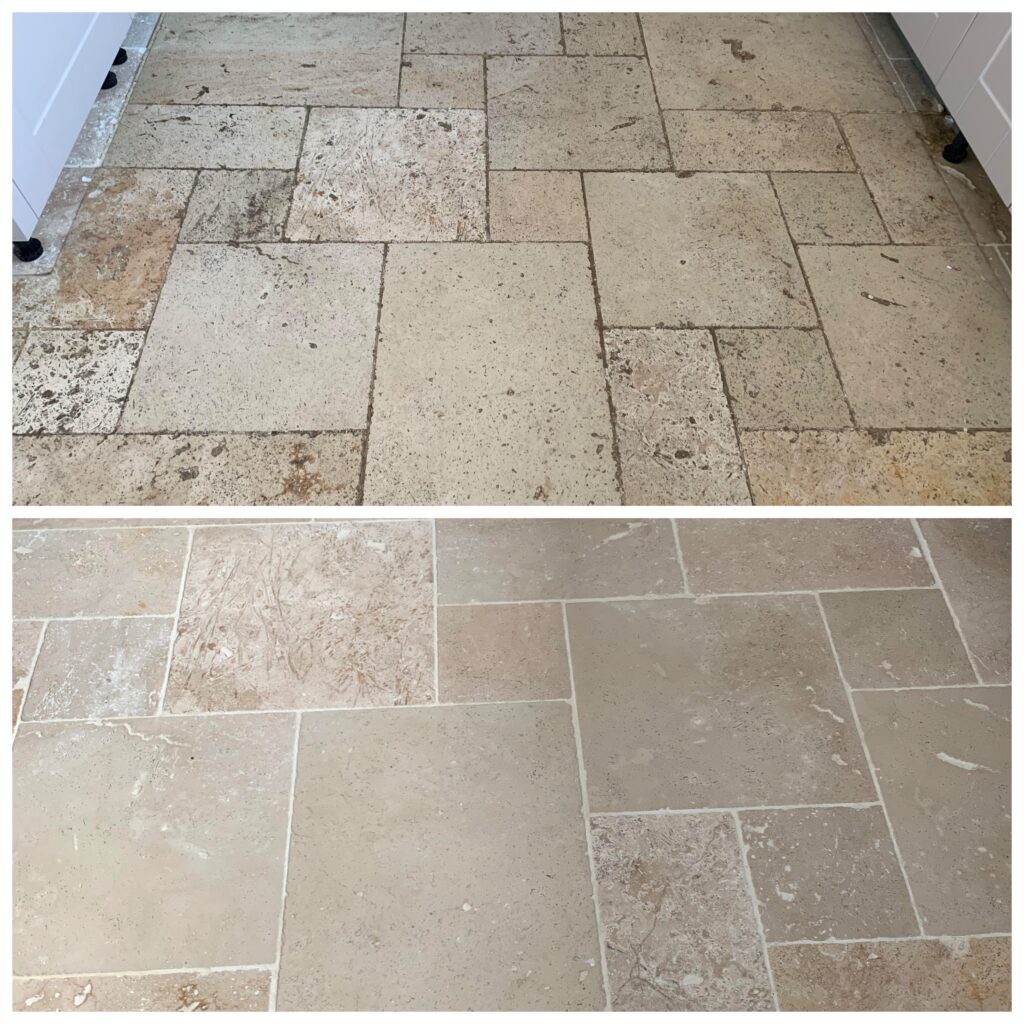
 Strip, clean & seal
Old treatment removed
A tired coating and embedded soil were stripped away before the floor was restored and resealed.
The restoration process
How we restore a travertine floor
Not every floor needs every stage. We assess the stone first and build the process around its condition.
Assess
Identify the finish, wear, damage, coatings and likely previous treatments.
Deep clean
Agitate and extract embedded soil from the stone, pits and grout lines.
Repair
Fill suitable holes and small damaged areas with a closely matched material.
Refinish
Hone or polish where appropriate to create the agreed level of finish.
Seal
Apply a suitable professional sealer and explain ongoing maintenance.
Choose the right appearance
From natural matt to a polished finish
Where the stone and its condition allow, travertine can be restored to different levels of reflectivity. We discuss the look you prefer, how the room is used and the practical maintenance implications before recommending a finish.
Matt
A low-reflective, natural appearance that suits rustic and tumbled travertine.
Satin
A balanced finish with subtle reflection and enhanced colour.
Polished
A brighter, more reflective appearance where the stone is suitable.
Watch a restoration
See our travertine restoration work
Watch the process and finished result from a genuine Floor Rescue project.
Protecting the result
Travertine care after restoration
The correct maintenance routine helps the new finish last and prevents residues building up again.
What sealing does—and does not do
A professional sealer reduces the rate at which liquids and soil penetrate porous travertine, giving you more time to clean spills and making maintenance easier.
It does not make the stone completely stain-proof or prevent acidic products from etching the surface. We explain the appropriate aftercare once the work is complete.
Customer experience
Why customers restore instead of replace
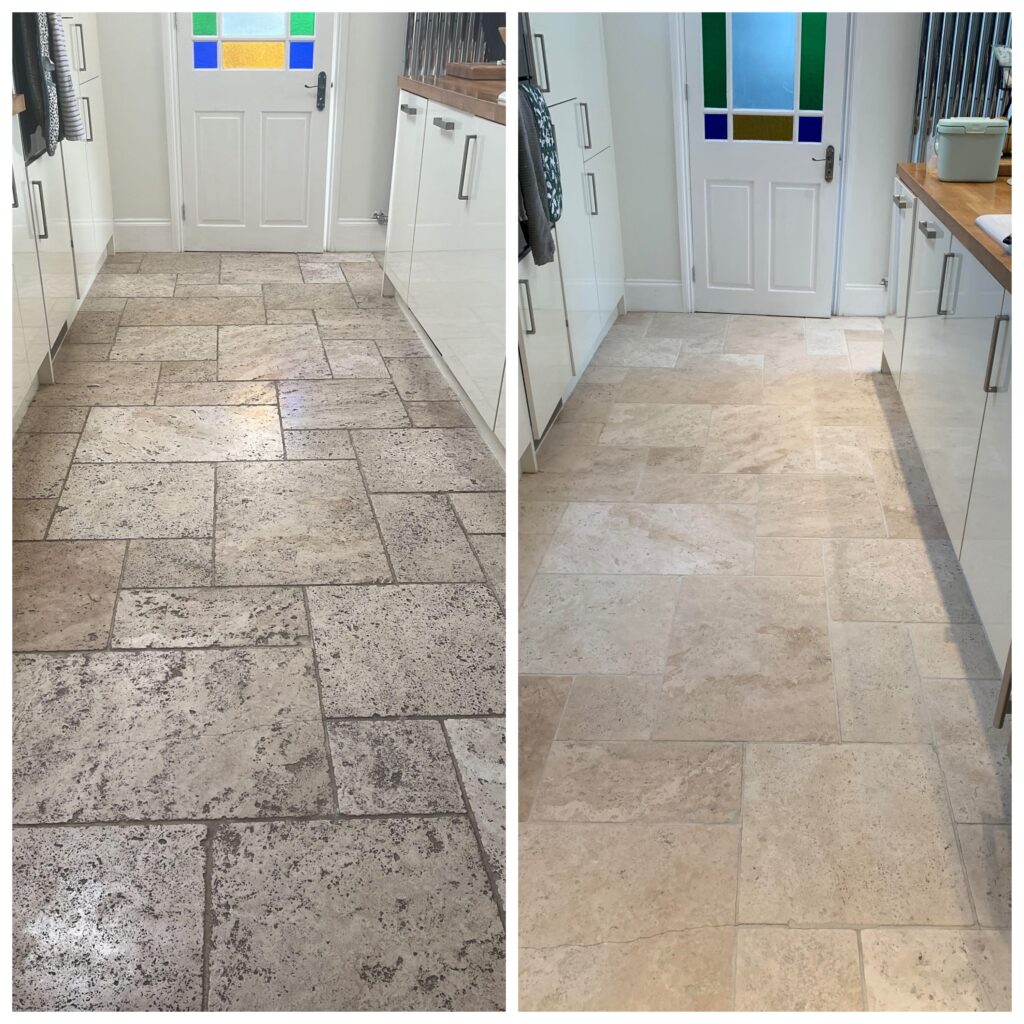
“We were considering replacing our travertine tiles as they were making the kitchen look tired and worn. We are so glad we didn’t—you can’t even see where the previous holes were.”— Barbara Jones
Common questions
Travertine restoration FAQs
Can holes in travertine be repaired?
Suitable holes and small damaged areas can often be filled with a closely matched repair material. The floor is assessed first because the appropriate method depends on the location, depth and condition of the stone.
Can you remove scratches or dull patches?
Many surface scratches, wear patterns and dull areas can be improved through honing or polishing. Deep damage may remain partly visible, so we explain the realistic outcome before work begins.
Does travertine always need sealing?
Travertine is porous and normally benefits from a suitable professional sealer after restoration. The product used depends on the finish, previous treatment and how the area is used.
Can I choose between matt, satin and polished?
Often, but not always. The available finishes depend on the type of travertine, its condition and the existing installation. We will recommend the suitable options after assessment.
Can you quote from photographs?
Frequently, yes. Send clear photographs of the whole floor and close-ups of worn, stained or damaged areas, along with the approximate square metres and postcode. More involved work may require a visit.
How soon can the floor be walked on?
This depends on the restoration process and sealer used. We will explain drying, curing and access requirements before the work is booked.
Free travertine assessment
Show us your floor
Send photographs, your postcode, approximate floor size and a brief description of its condition. We can often provide an initial assessment and quotation from this information.
Request your free quotation
Complete the form and we’ll respond as soon as possible.